


What is Facial Cotton Tissue?
Facial cotton tissue refers to a type of disposable product made from soft, cotton-like material. These tissues are often used for personal care, makeup application, or as an alternative to traditional paper tissues. They are designed to be gentle on the skin and are commonly used to cleanse, remove makeup, or apply skincare products. Facial cotton tissues come in various forms, including pads, squares, or sheets, and are available in both plain and pre-moistened options depending on their intended use. They are convenient for on-the-go beauty routines and for individuals who prefer a more natural texture for their personal hygiene products.
Why Choose Us?
Hebei Yihoucheng Commodity Co., Ltd(YHC), established in 1998, is one of the largest private label commodity manufacturers in China. We started the exporting business since 2005, overseas markets have been up to more than 30 countries and regions.
YHC products' range, which is for top leading global brands and companies, covers wet wipes, puppy training pad, nursing pad, sanitary napkin, toilet paper, kitchen paper etc.
High quality
Our products are manufactured or executed to very high standards, using the finest materials and manufacturing processes.
Professional team
Our professional team collaborate and communicate effectively with one another, and are committed to delivering high-quality results. They are capable of handling complex challenges and projects that require their specialized expertise and experience.
Long warranty
The long-term warranty is designed to give consumers more confidence that their purchases and services will continue to be valid.
Rich experience
Dedicated to strict quality control and attentive customer service, our experienced staff is always available to discuss your requirements and ensure complete customer satisfaction.



Benefits of Kitchen Paper Towel Roll
Gentle on skin: Cotton tissues are hypoallergenic and non-comedogenic, meaning they are less likely to cause allergic reactions or clog pores. This makes them ideal for sensitive skin types or for those with acne-prone skin.
Soft texture: The softness of cotton tissues provides a gentle exfoliation effect without irritating the skin. This can be beneficial when removing makeup or applying toner, as it helps to cleanse the surface without causing abrasions.
Absorbency: The natural fiber of cotton has excellent absorbency properties, allowing it to soak up liquids quickly. This is particularly useful for applying toners, serums, or removing excess makeup without leaving residue.
Convenience: Pre-moistened facial cotton tissues are saturated with skincare solutions, providing a ready-to-use option for busy individuals. They are also easy to carry in a purse or travel bag.
Versatility: Cotton tissues can be used for a variety of tasks, including removing makeup, applying toner, cleaning up spills, or even as a quick refresher for the face throughout the day.
Eco-friendly option: Many brands offer cotton tissues made from organic or sustainably sourced materials. Using these products can be a more environmentally friendly choice compared to disposable wipes or other synthetic alternatives.
Cost-effective: Cotton tissues are often more economical than other skincare tools, such as reusable cloths or expensive applicators. Their disposable nature also eliminates the need for laundering, saving time and resources.
Skin health: Cotton tissues can aid in maintaining skin health by ensuring that products are applied evenly and effectively. They can also assist in removing dead skin cells, revealing a smoother complexion.
Chemical-free: For those who wish to avoid harsh chemicals found in some skincare products, cotton tissues can serve as a simple tool to apply natural remedies or homemade skincare formulas.
Comfort: The softness of cotton tissues provides a comfortable user experience, especially when using them on delicate areas such as the eye contour.
Application of Facial Cotton Tissue
Makeup removal
Cotton tissues are gentle on the skin and effective at removing makeup, including waterproof mascara and eyeliner. They can be used with or without makeup remover, depending on the product's strength. The soft texture prevents pulling and tugging on the delicate skin around the eyes and lips.
Toning
After cleansing the face, cotton tissues are commonly used to apply toner. The even distribution of the toner ensures that the skin's surface is balanced and prepped for subsequent skincare steps, such as moisturizing. Round cotton pads are particularly well-suited for this purpose, as they can be swept across the skin without leaving residue.
Application of topical treatments
Cotton tissues are ideal for applying topical medications or treatments to the skin. Their ability to hold liquids allows for precise dosing, while their gentle nature ensures that the medication is applied evenly without causing irritation. This is particularly useful for treating localized skin conditions, such as acne or rosacea.
Exfoliation
When combined with a mild exfoliant, such as alpha hydroxy acids (AHAs) or beta hydroxy acids (BHAs), cotton tissues can help remove dead skin cells, unclog pores, and promote skin cell turnover. This can result in a smoother complexion and improved texture.
Skincare masks
Cotton tissue sheets can be soaked in essence, serum, or other skincare solutions to create customized masks. These masks deliver concentrated active ingredients to the skin, offering hydration, brightening, or anti-aging benefits. They are also convenient for travel and can be easily disposed of after use.
Spot treatments
Pre-moistened cotton pads with specific skincare ingredients can be used for spot treatments. For example, pads containing salicylic acid are effective for targeting blemishes, while those with niacinamide can be used to reduce redness and inflammation.
Sunburn care
In cases of sunburn, cotton tissues soaked in aloe vera gel or a calming lotion can provide relief from the stinging sensation and help to soothe the skin. The cool touch and moisturizing properties of the aloe can help to speed up the healing process.
Wound care
In clinical settings, cotton tissues are used for the initial cleaning and dressing of minor wounds. Their absorbency and softness make them suitable for absorbing blood and fluids without causing further trauma to the wound.
Skin sampling
In medical dermatology, cotton swabs or tissues are used to collect skin samples for analysis, such as in the case of fungal cultures or bacterial smears.
Types of Facial Cotton Tissue
Regular cotton pads: These are the most basic type of facial cotton tissues, made from 100% cotton. They are versatile and suitable for general use, including removing makeup, applying toner, and cleansing the skin.
Cotton rounds with edges: Some cotton pads have edges that are either rounded or cut into points. These designs can make it easier to navigate around the contours of the face, particularly the nose and eyes.
Round cotton pads: Shaped like small discs, round cotton pads are perfect for spot treatments, applying eye creams, or gently exfoliating specific areas of the face.
Square cotton pads: Rectangular in shape, square cotton pads are larger and provide a greater surface area for use. They are ideal for full-face applications, such as applying toner or astringents.
Pre-moistened cotton pads: These pads are soaked in a solution, which may include ingredients like micellar water, toner, or lotion. They are convenient for quick makeup removal or for refreshing the skin throughout the day without the need for additional products.
Bamboo cotton pads: Bamboo fibers are used to create these pads, which are biodegradable and more environmentally friendly than traditional cotton pads. They are soft and strong, making them suitable for a range of skincare uses.
Organic cotton pads: Made from organic cotton, these pads are free from pesticides and genetically modified organisms (GMOs). They are an eco-friendly choice for those who prioritize natural and sustainable products.
Charcoal infused cotton pads: Activated charcoal is infused into these cotton pads to provide additional benefits, such as deep cleansing and helping to detoxify the skin. They are particularly useful for oily or blemish-prone skin.
Reusable cotton pads: These are made from a thicker cotton material and are designed to be washed and reused multiple times. They are more eco-conscious than single-use pads and can save money in the long run.
Cotton tissue sheets: Thinner than pads, cotton tissue sheets are ideal for delicate areas like the under-eye region. They are also great for soaking in essence or serum before applying to the skin for targeted treatment.
Material of Facial Cotton Tissue

Facial cotton tissues are typically made from either 100% pure cotton or a blend of cotton with other materials such as rayon or polyester. Pure cotton tissues are preferred for their natural softness and breathability, which allows the skin to breathe and reduces the risk of irritation. Organic cotton is also used for tissues aimed at consumers concerned about chemical exposure and environmental impact.
Rayon, another common material, is a semi-synthetic fiber made from regenerated cellulose. Rayon is known for its exceptional absorbency and is often blended with cotton to enhance the performance of the tissue. However, rayon is not as breathable as cotton and may not be as suitable for sensitive skin.
Polyester is a synthetic material rarely used alone in facial cotton tissues due to its lack of breathability and potential to cause skin irritation. When included in blends, it is usually mixed in small proportions to add strength and durability to the tissue.
In terms of production, the raw cotton fibers are harvested, cleaned, and then spun into yarn. For non-organic cotton, this process may involve the use of pesticides and fertilizers. Organic cotton, on the other hand, is grown without these chemicals and follows strict environmental standards.
The yarn is then woven or knitted into fabric, which is cut into the desired shape and size of the tissue. For pre-moistened tissues, the fabric is dipped or sprayed with a liquid solution containing skincare ingredients such as toners, astringents, or lotions. Finally, the tissues are packaged and sealed to maintain their freshness until they are ready for use.
The quality and characteristics of the materials used in facial cotton tissues directly influence their performance, comfort, and suitability for different skin types and conditions. Manufacturers strive to balance cost, durability, and skin friendliness when choosing the materials for their products.

Components of Facial Cotton Tissue
1.Cotton fibers: The primary component of facial cotton tissues is cotton fibers, which are obtained from the cotton plant's seed pods, known as bolls. Cotton fibers are composed primarily of cellulose, a natural polymer that provides strength and flexibility. The length, fineness, and softness of the fibers contribute to the overall quality of the cotton tissue.
2.Binding agents: During the manufacturing process, binders may be added to help hold the cotton fibers together, particularly in the case of non-woven fabrics used in some cotton tissues. Binders can be synthetic or natural polymers and are used sparingly to maintain the softness and absorbency of the tissue.
3.Lotions and moisturizers: Some facial cotton tissues are pre-moistened with skincare lotions or moisturizers. These may include hyaluronic acid, aloe vera, vitamins, and antioxidants, which are chosen for their beneficial effects on the skin. The concentration and type of these ingredients will vary depending on the intended use of the tissue.
4.Preservatives and stabilizers: To ensure the longevity and safety of pre-moistened tissues, preservatives are added to prevent microbial growth. Stabilizers may also be included to maintain the integrity of the active ingredients in the tissue.
5.Fragrances: Certain cotton tissues may contain fragrances to provide a pleasant scent. However, due to the potential for allergic reactions, many manufacturers offer unscented options.
6.Dyes: If the cotton tissues are colored, non-toxic dyes are used to add pigment. Dyes must be carefully selected to ensure they do not cause skin irritation or sensitization.
7.Absorbency aids: Absorbency is a critical characteristic of facial cotton tissues. Manufacturers may incorporate materials or modify the weave to enhance the tissue's ability to absorb and retain liquids.
8.Biodegradable components: Many modern facial cotton tissues are made with biodegradable materials to minimize environmental impact. These may include plant-based alternatives to traditional plastics or naturally occurring fibers like bamboo.
9.Anti-inflammatory and soothing agents: In tissues formulated for sensitive skin or specific skin conditions, ingredients like chamomile extract or calendula may be added for their anti-inflammatory properties.
10.Barrier layers: For tissues used in medical settings or for wound care, a barrier layer may be included to prevent the transfer of bacteria or other pathogens.
Process of Facial Cotton Tissue
The first step is to select the raw material, which is usually 100% pure cotton. The quality of the cotton fibers is crucial for the final product's softness, strength, and absorption capacity.
Cotton fibers are separated from the seeds through a process called ginning. This involves passing the harvested cotton through a series of rollers that strip the lint from the seed.
The cotton fibers are then carded, which aligns the individual fibers into a thin web or sheet. This process helps to straighten and clean the fibers, removing any short or impure fibers.
Carded cotton is drawn out into long strands or rovings, which are then slightly twisted to increase their tensile strength.
Rovings are spun into yarn by twisting the cotton fibers together. The twist imparts strength and durability to the yarn.
Yarn made from cotton fibers is woven into fabric on large looms. Weaving creates the structure of the cotton tissue, determining its thickness, weight, and texture.
The woven fabric may be dyed to give it color, although many facial cotton tissues are left white. After dyeing, the fabric undergoes finishing processes to improve its softness, absorbency, and other desirable qualities. Finishing might include singeing to remove fuzz, calendering to flatten the surface, and applying lotions to enhance softness.
Once the finished fabric has been inspected for quality, it is cut into individual tissues. The size and shape of the tissues are determined by the intended use and the manufacturer's standards.
The cut tissues are stacked, folded, and packaged into individual packets or larger containers. The packaging is often designed to protect the tissues from moisture and contamination until they are ready for use.
Throughout the entire manufacturing process, quality control is strictly monitored to ensure that the tissues meet the required standards for softness, absorbency, and safety.
How Facial Cotton Tissue Work?
Facial cotton tissues are designed to be soft, gentle tools for various skincare applications. They function primarily as a delivery system for skincare products and as a means to cleanse or exfoliate the skin. The effectiveness of a facial cotton tissue depends largely on its quality and the way it interacts with the skin and skincare products. Here's a detailed explanation of how facial cotton tissues work:
● Delivery system for skincare products: Facial cotton tissues are often used to apply products like toners, astringents, serums, and essences. Their softness allows them to gently sweep across the skin, ensuring even distribution of the product without causing friction or irritation. The fibers of the cotton can hold and deliver a precise amount of liquid, ensuring that you use the right quantity of the product.
● Cleansing: When used with a cleanser, facial cotton tissues can help lift dirt, oil, and makeup residue from the skin's surface. The fibers of the cotton trap particles, allowing for a thorough yet gentle cleansing action. This is particularly useful for delicate areas around the eyes and nose where the skin is thinner and more prone to sensitivity.
● Exfoliation: Some facial cotton tissues are designed with a textured surface or come in pads pre-soaked with exfoliating acids like glycolic acid or salicylic acid. These textures and ingredients help to gently remove dead skin cells, revealing smoother, brighter skin. The cotton serves as a buffer, reducing the risk of abrasive damage that can occur with harsher physical exfoliants.
● Moisture retention: Cotton is known for its excellent moisture-retaining properties. High-quality cotton tissues can hold a significant amount of liquid, which helps in the application of hydrating products. This ensures that the skin remains moisturized and that the active ingredients in the products are delivered effectively.
● Biocompatibility: Cotton is a natural fiber that is biocompatible with human skin, making it less likely to cause allergic reactions or sensitivities compared to synthetic materials. This makes facial cotton tissues suitable for all skin types, including sensitive skin.
● Disposability: One of the major advantages of facial cotton tissues is their disposability. Unlike cloths or washable towels, they do not harbor bacteria or require laundering, which can save time and reduce the risk of contamination.
Facial cotton tissues work by providing a soft, non-irritating medium for the application of skincare products, assisting in cleansing and exfoliation, retaining moisture, and offering convenience through disposability. The choice of facial cotton tissues should be tailored to individual skin types and specific skincare needs to achieve the desired results safely and effectively.
How to Maintain Facial Cotton Tissue?
Store in a dry place
Keep facial cotton tissues in a cool, dry place to prevent them from absorbing moisture from the air, which could lead to mold growth or degradation of the tissue's structure.
Avoid direct sunlight
Exposure to sunlight can cause the cotton to fade or weaken over time. Store tissues in a dark area or in an opaque container to protect them from UV rays.
Sealed containers
Use airtight containers or original packaging to keep tissues fresh and prevent contamination. If using a resealable bag, make sure to squeeze out excess air before sealing.
Check for expiration dates
Although cotton tissues don't typically expire, they can become less effective if stored for extended periods. Check the best before date and replace tissues when necessary.
Hygiene
Always handle tissues with clean hands to prevent the transfer of bacteria or dirt onto the cotton. This is especially important for pre-moistened tissues, as they may support bacterial growth if contaminated.
Avoid chemical exposure
Keep tissues away from harsh chemicals, solvents, or strong odors, as these can affect the quality of the cotton and alter the scent or effectiveness of any added ingredients.
Use gently
When using facial cotton tissues, apply gentle pressure rather than vigorous rubbing to avoid damaging the delicate skin on your face.
Discard after use
Do not reuse facial cotton tissues as they can harbor bacteria from previous uses. Discard each tissue after one application, and never share tissues with others to maintain personal hygiene.
Recycle or compost
If possible, recycle the packaging of the cotton tissues and compost the used tissues if they are made from biodegradable materials. This helps reduce waste and promotes sustainability.
How to Choose Facial Cotton Tissue?
Skin type: Different skin types may require different types of cotton tissues. For example, if you have sensitive skin, look for tissues labeled as hypoallergenic or free from fragrances and dyes. If you have oily skin, choose tissues with a slightly textured surface that can help remove excess oil without irritating the skin.
Purpose: Consider what you will be using the cotton tissues for. If you plan to use them for applying toner or astringent, opt for high-quality tissues that won't leave lint behind. For makeup removal, consider tissues with a softer texture that can gently remove makeup without causing irritation.
Absorbency: Look for tissues with good absorbency if you need them to soak up a lot of liquid, such as when applying a mask. However, if you only need them for spot treatments or small areas of the face, lower absorbency may suffice.
Size and shape: Cotton tissues come in various sizes and shapes. Choose a size and shape that fits your needs. Rounded or oval-shaped tissues may be better for spot treatments, while larger rectangular tissues may be more versatile for general use.
Material: Cotton tissues can be made from 100% pure cotton or blended with other materials like rayon or polyester. Pure cotton tissues are generally softer and more absorbent, but blended tissues may be more durable and easier to handle. Consider the material based on your skin type and preferences.
Fragrance: If you have sensitive skin or prefer a fragrance-free product, look for unscented cotton tissues. However, if you enjoy scented products, there are tissues available with various essential oil blends or light fragrances.
Brand reputation: Choose a brand with a good reputation for producing high-quality, safe, and effective skincare products. Reading reviews and customer feedback can help you make an informed decision.
Price: Consider your budget when choosing facial cotton tissues. Prices can vary widely depending on the brand, material, and features. Compare prices and look for deals or discounts to get the best value for your money.
Packaging: Consider the packaging of the cotton tissues. Some packages are resealable, which can help keep the tissues fresh and prevent them from drying out. Others come in individual packets, which can be convenient for travel or on-the-go use.
Environmental impact: If sustainability is important to you, look for cotton tissues made from organic or biodegradable materials. Avoid tissues packaged in excessive plastic or non-recyclable materials to minimize waste.
Our Factory
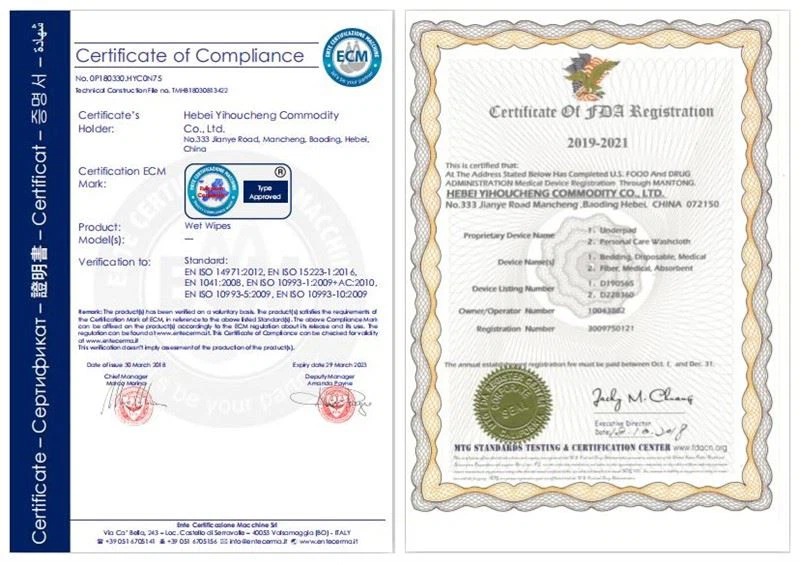
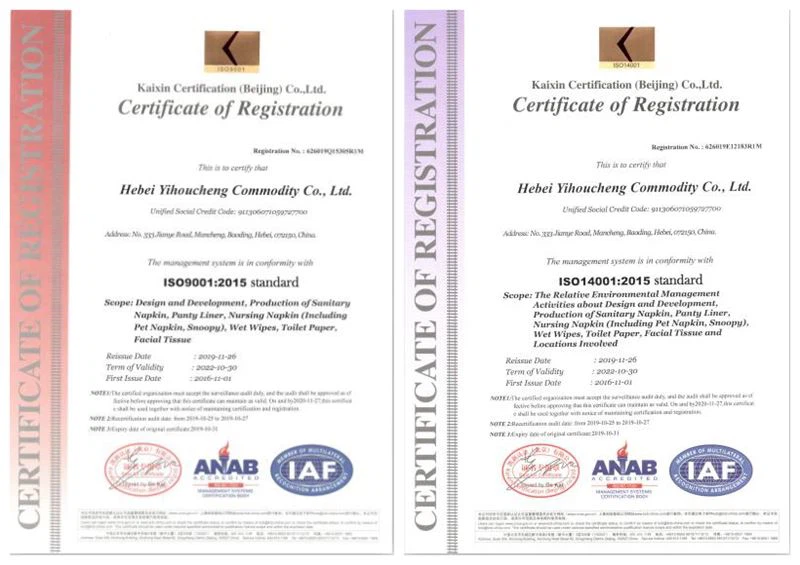
Our factory covers 400,000sqm with under pad workshop, wet wipes workshop and paper making and paper processing workshop. Besides, we have professional QA team and lab. YHC products' range, which is for top leading global brands and companies, covers wet wipes, puppy training pad, nursing pad, sanitary napkin, toilet paper, kitchen paper etc. YHC has been approved by ISO9001 quality management system and ISO14001 environmental management system, and FDA & CE registration SGS. YHC has also been assessed and certified as meeting the requirements of ISO13485.

Certifications
FAQ
Q: What is facial cotton tissue?
Q: How is facial cotton tissue different from regular tissues?
Q: 3.Can I use facial cotton tissue to remove waterproof mascara?
Q: How to use facial cotton pads correctly?
Q: Can I reuse facial cotton tissue?
Q: Are there any eco-friendly options for facial cotton tissue?
Q: 7.Can I use facial cotton tissue with my toner?
Q: Can I use facial cotton tissue with my acne treatment?
Q: Is it okay to use facial cotton tissue if I have sensitive skin?
Q: Can I use facial cotton tissue to cleanse my face?
Q: Can I use facial cotton tissue with my toner (astringent)?
Q: Can I use facial cotton pads to apply the mask?
Q: Can facial cotton pads be used to wipe mobile phone screens?
Q: Can facial cotton pads be used to remove eye bags?
Q: Can I use facial cotton pads to remove blackheads?
Q: Can facial cotton pads be used to apply sunscreen?
Q: Can facial cotton pads be used to remove makeup?
Q: Can facial cotton pads be used to apply wet compresses?
Q: Will facial cotton pads cause dry skin?
Q: Can facial cotton pads be used to wipe other parts of the body?