


What is Kitchen Paper Towel Roll?
Kitchen paper towel rolls are disposable absorbent sheets made from paper pulp, primarily wood fibers. They come in a cylindrical shape on a perforated roll and are designed for quick absorption of liquids, making them ideal for cleaning up spills, wiping hands, and drying dishes. The individual sheets can be easily torn off along pre-cut lines, allowing for convenient single-use cleaning. Paper towel rolls are available in various levels of thickness and durability, often categorized as "premium" for greater strength and absorbency, or "economy" for more basic needs. They are a common household item due to their versatility and ease of use.
Why Choose Us?
Hebei Yihoucheng Commodity Co., Ltd(YHC), established in 1998, is one of the largest private label commodity manufacturers in China. We started the exporting business since 2005, overseas markets have been up to more than 30 countries and regions.
YHC products' range, which is for top leading global brands and companies, covers wet wipes, puppy training pad, nursing pad, sanitary napkin, toilet paper, kitchen paper etc.
High quality
Our products are manufactured or executed to very high standards, using the finest materials and manufacturing processes.
Professional team
Our professional team collaborate and communicate effectively with one another, and are committed to delivering high-quality results. They are capable of handling complex challenges and projects that require their specialized expertise and experience.
Long warranty
The long-term warranty is designed to give consumers more confidence that their purchases and services will continue to be valid.
Rich experience
Dedicated to strict quality control and attentive customer service, our experienced staff is always available to discuss your requirements and ensure complete customer satisfaction.



Benefits of Kitchen Paper Towel Roll
Convenience: Paper towels are immediately accessible and easy to use. There's no need to wash and dry cloths; you simply pull off a sheet as needed. This makes them ideal for quick clean-ups and on-the-go use.
Absorbency: Paper towels are highly absorbent, capable of soaking up large amounts of liquid quickly. This is particularly useful for dealing with spills, whether it's a broken glass of juice or a greasy mess on the countertop.
Hygiene: Using a fresh sheet of paper towel for each task reduces the risk of spreading bacteria and contaminants. They are especially helpful for cleaning up after raw meat or other potential sources of foodborne illness.
Versatility: Paper towels can serve multiple purposes beyond cleaning up spills. They can be used as napkins, for wrapping food to prevent it from dripping, or even as a DIY craft material.
Cost-effectiveness: Although paper towels require regular purchasing, they can be economical in the long run, especially when bought in bulk. They are generally less expensive than other cleaning supplies and can be used for various tasks without needing to buy multiple products.
Disposability: The convenience of disposability means no dirty laundry or ongoing cleanup. After use, paper towels can be thrown directly into the trash, which is particularly useful when dealing with unpleasant messes or hazardous substances.
Quick drying: Paper towels can help dry dishes and hands quickly without leaving lint behind, which is a common problem with some cloth towels.
Non-toxicity: Paper towels are typically free from chemicals and dyes, making them safe to use around food and children.
Storage: Paper towel rolls take up minimal space and can be stored easily under cabinets, on shelves, or even inside doors with specially designed holders.
Brand options: There is a wide range of paper towel brands, providing consumers with choices based on personal preferences, including different textures, levels of absorbency, and environmental considerations.
Types of Kitchen Paper Towel Roll
Virgin fiber paper towels
These are made entirely from wood pulp derived from newly harvested trees. They offer excellent absorbency and strength due to the quality and purity of the fibers. However, they have a larger environmental footprint compared to recycled paper towels.
Recycled paper towels
Manufactured using post-consumer waste paper, these paper towels are eco-friendly and reduce the demand for virgin resources. Recycled paper towels may have varying degrees of white coloration and absorbency depending on the source material and recycling process.
Bamboo paper towels
Bamboo is an environmentally sustainable resource that grows rapidly and does not require replanting after harvesting. Bamboo paper towels are biodegradable and compostable, offering a more sustainable alternative to traditional paper towels.
Terry cloth-like paper towels
These have a looped or textured surface that provides extra scrubbing power. They are designed for tougher cleaning tasks where more abrasion is needed, such as removing stuck-on food from pots and pans.
Scented paper towels
Infused with essential oils or fragrances, these paper towels add a pleasant aroma to the kitchen while performing standard cleaning tasks. The scents can help mask odors and leave a fresh scent after cleaning.
Eco-friendly paper towels
These are made from sustainable resources like bamboo or recycled content and are often bleach-free. Some are also marketed as being biodegradable and compostable, reducing environmental impact.
Premium/ultra-soft paper towels
Engineered for delicate cleaning and drying tasks, these paper towels are extra soft and gentle on surfaces. They are often used for drying dishes and hands without leaving lint or streaks.
Multi-purpose paper towels
Designed for versatility, these paper towels balance absorbency with strength, making them suitable for a wide range of cleaning tasks, from wiping up spills to dusting.
Single-ply vs. Multi-ply paper towels
Single-ply towels are thinner and use fewer resources during production. Multi-ply towels, on the other hand, are thicker and more durable, offering greater absorbency and strength.
Material of Kitchen Paper Towel Roll
The material of kitchen paper towel rolls is predominantly paper, which is composed of cellulose fibers extracted from wood pulp. This wood pulp can come from either softwood or hardwood trees, and the choice of source affects the properties of the finished paper towel product. The manufacturing process begins with logging and chipping the trees, followed by cooking the chips in a chemical solution to break down the lignin and produce a slurry of cellulose fibers.
These fibers undergo further refining to enhance their bonding properties and are then spread onto a moving screen to form a mat. The mat is pressed to remove excess water, and at this stage, various additives such as binders, wet strength agents, or dyes may be introduced to tailor the paper's characteristics. The paper mat passes through heated rollers to dry, setting any treatments and removing the remaining moisture. Creping follows, where the paper is passed over steam-heated rollers to create a textured surface that improves absorbency and softness. The creped paper is then rolled onto a large roll and cut into smaller rolls for dispensing.
Additionally, there are eco-friendly alternatives to traditional wood pulp paper towels, including bamboo paper towels. Bamboo is favored for its sustainability, as it grows rapidly and does not require replanting after harvest. The production process for bamboo paper towels mirrors that of wood pulp paper towels but starts with bamboo fibers.
Recycled paper towel rolls are another option, made from post-consumer waste paper. These products contribute to waste reduction and conservation of resources. The recycling process involves collecting, sorting, and de-inking the waste paper to extract usable fibers, which are then processed into new paper towels.
The choice of material for kitchen paper towel rolls depends on factors such as cost, sustainability, performance, and consumer preference. Each material offers unique benefits, whether in terms of absorbency, strength, or environmental impact.
Application of Kitchen Paper Towel Roll
Absorption
The primary function of paper towels is to absorb liquids. They are commonly used to soak up spills of water, oil, and other fluids from countertops, stovetops, and tables. Their quick-drying properties make them ideal for mopping up messes before they can cause stains or accidents.
Food preparation
Paper towels are used to blot excess moisture from raw meat, vegetables, and fruits. This practice helps in achieving a better sear on meats when cooking and prevents sogginess in salads and sandwiches. They can also be used to wrap foods for storage, helping to keep them fresh by absorbing moisture that could lead to spoilage.
Hygiene
Paper towels offer a hygienic option for hand drying, especially in commercial kitchen environments where cross-contamination must be strictly controlled. Unlike cloth towels, single-use paper towels do not harbor bacteria and are discarded after use.
Protection
During transport, paper towels can be placed between stacked dishes or delicate items to prevent scratching and breakage. They can also be used as a protective layer when wrapping food for takeaway or delivery, ensuring that containers remain clean.
Cleanup
After cooking, paper towels are employed to clean utensils, pots, pans, and dishes. They can be used to wipe away food residue, grease, and grime. The disposable nature of paper towels reduces the need for washing rags, which saves time and water.
Oven use
Certain types of paper towels are oven-safe and can be used to line baking sheets, catch drips, or cover food during the cooking process. They can be particularly useful for tasks like roasting vegetables or baking fish.
Microwave use
Paper towels can be used to cover food in the microwave. This helps to contain splatter, prevent food from drying out, and can even aid in reheating by creating steam.
Non-slip surfaces
When placed under cutting boards, damp paper towels can provide a non-slip surface, ensuring safety and stability during food preparation.
Disposal of grease
Paper towels can be used to collect and dispose of cooking grease. By wrapping the grease in paper towels before throwing it away, the risk of clogging pipes is reduced.
Process of Kitchen Paper Towel Roll
The primary raw material used in the manufacture of paper towels is wood pulp. The wood comes from sustainable sources such as timber or recycled paper. The wood is cut into small pieces and then ground into a fine pulp.
The wood pulp is then treated with chemicals to remove impurities and to prepare it for the papermaking process. This step is crucial to ensure the quality of the final product.
The treated pulp is mixed with water to form a slurry. This mixture is then spread onto a large, moving screen. As the water drains away, the fibers bond together to form a thin sheet of paper.
The wet paper is then pressed between heavy rollers to remove excess water and to flatten it. It is then passed through a series of heated dryers to completely remove all moisture.
After drying, the paper is subjected to a creping process. This involves heating the paper and then passing it over rollers with a textured surface. This creates the characteristic crinkled appearance of paper towels, which enhances their absorbency.
The creped paper is then cut into individual sheets. These sheets are stacked and rolled onto a cardboard core to form a roll.
Finally, the paper towel rolls are packaged for distribution. They are usually wrapped in plastic or placed in a cardboard box.
Components of Kitchen Paper Towel Roll
Sheets of paper: The main component is the paper itself, which is made from wood pulp derived from either virgin or recycled materials. These fibers are processed and turned into a slurry that forms the basis of the paper. The paper is treated with various chemicals to enhance its properties, such as wet strength and absorbency.
Core: At the center of the roll is a cardboard tube known as the core. This core serves as a support structure around which the paper is wound. Cores are usually made from recycled paperboard or Kraft paper, which provides sufficient rigidity to maintain the shape of the roll during transportation and use.
End plates: These are flat, circular pieces of cardboard or plastic that secure the paper sheets to the core. They have tabs or slots that allow the paper to be torn off easily one sheet at a time without unraveling the entire roll.
Perforations: Most paper towel rolls feature perforations between each sheet, allowing the user to tear off exactly the amount needed. These perforations are strategically placed to ensure the paper can be torn easily without ripping or tearing unevenly.
Inner wrapper: To protect the paper from dust and contaminants, many paper towel rolls are wrapped in a thin layer of plastic or paper. This wrapper is often sealed with adhesive and may have branding or instructions printed on it.
Outer packaging: For retail purposes, the paper towel rolls are often placed in a cardboard box or shrink-wrapped in plastic. This outer packaging is designed to protect the rolls during shipping and display them attractively on store shelves.
Labeling: The outer packaging and sometimes the inner wrapper include labeling with information about the product, such as brand name, quantity (number of sheets or rolls), suggested uses, and certifications (e.g., biodegradable, compostable, or made from recycled materials).
How to Maintain Kitchen Paper Towel Roll?

1.Store in a dry area: Keep the paper towel roll in a location that is free from moisture, as damp environments can promote mold growth and deterioration of the paper. Avoid placing it near sinks, dishwashers, or other areas prone to splashing or leaks.
2.Protect from direct sunlight: Exposure to direct sunlight can cause the paper to fade and weaken over time. Store the paper towel roll in a cupboard or pantry that is out of direct sunlight.
3.Use appropriate dispensers: Utilize a paper towel dispenser that fits the size of your rolls. Proper dispensers not only make it easier to tear off sheets but also protect the roll from dust and contaminants.
4.Close the inner wrapper: If the paper towel roll comes with an inner wrapper, leave it on until you are ready to use the roll. This will keep the top sheet clean and prevent it from becoming soiled.
5.Replace regularly: Do not let the paper towel roll sit unused for extended periods. Over time, the static cling can diminish, and the roll might start to unravel or become difficult to handle.
6.Handle with care: When removing sheets, avoid pulling too hard or bending the roll, as this can damage the structure of the paper or cause it to come off in strips rather than individual sheets.
7.Clean the dispenser: Regularly wipe down the dispenser with a mild soap and water solution or disinfectant wipes to keep it hygienic and prevent residue buildup that could transfer to the paper towels.
8.Avoid grease and chemicals: Keep the paper towel roll away from greasy or chemically laden substances. These can saturate the paper and make it less effective, as well as potentially cause harmful reactions with certain materials.
9.Recycle when finished: Once the paper towel roll is empty, recycle it according to local guidelines if the material and condition allow. Many recycling facilities accept paper products, but they should be clean and free of food residue and contaminants.

How to Choose Kitchen Paper Towel Roll?
Absorbency
Look for paper towels that are highly absorbent to quickly pick up liquids and spills. Check the thickness and texture of the sheets; denser, textured paper tends to absorb more than thinner, smooth varieties.
Strength
Consider the durability of the paper towels. Choose towels that can withstand multiple wipes without tearing, especially if you often use them for heavier cleaning tasks. Two-ply or even three-ply options generally offer better strength.
Sustainability
If eco-friendliness is important to you, look for paper towels made from recycled materials or those labeled as sustainable. Some brands use bamboo, a rapidly renewable resource, as an alternative to traditional wood pulp.
Price
Set a budget and compare prices per roll or per sheet. While cheaper options may seem appealing, they might not always provide the best value if you end up using more due to lack of absorbency or strength.
Size and sheet count
Determine the size of the roll and the number of sheets per roll. Standard sizes vary, and some brands offer mega packs that provide better value in the long run.
Perforations
Ensure that the paper towels have evenly spaced perforations that allow for easy tear-off. Good perforations should enable you to pull one sheet at a time without tearing adjacent ones.
Brand reputation
Consider purchasing from reputable brands known for quality and consistency. Reading reviews and ratings can also give insight into the performance of different brands.
Additional features
Some paper towels come with additional features like lotion for added softness, no scent for those sensitive to fragrances, or pre-cut sheets for convenience.
Allergies and sensitivities
If anyone in your household has allergies or sensitivities, choose paper towels that are hypoallergenic and free from dyes, inks, and chlorine bleach.
How Kitchen Paper Towel Roll Works?
Kitchen paper towel rolls operate based on a simple yet effective design that allows users to easily access and tear off individual sheets as needed. Here's a detailed explanation of how they work:
● Material composition: Kitchen paper towel rolls are typically made from cellulose fibers derived from wood pulp. These fibers are processed and formed into large sheets through a papermaking process. The sheets are then treated with various chemicals to enhance their properties, such as wet strength, absorbency, and softness.
● Manufacturing process: After treatment, the paper sheets are cut to size and stacked into a roll. The roll is then inserted into a cardboard tube, which serves as a central core and provides structural support. The ends of the paper are secured to the core with adhesives or by being tucked into slots on the core itself.
● Inner wrapper: To protect the paper towels from dust and contaminants during storage, the roll is often wrapped in a thin layer of plastic or paper. This wrapper is sealed with an adhesive strip, which must be removed before use.
● Dispenser integration: Many kitchens are equipped with paper towel dispensers that hold the roll in place and facilitate the tearing off of sheets. The dispenser has a mechanism that allows the roll to spin freely while securing it against unwinding. Some designs feature a spring-loaded arm or a slotted opening that holds the end of the roll in place.
● Usage: When a sheet is needed, the user simply pulls the end of the paper toward themselves. The perforations between the individual sheets separate at the point of tension, allowing for a single sheet to be torn off cleanly. The design of the perforations is crucial; they must be strong enough to hold the paper together until torn but weak enough to separate easily.
● Sheet size and thickness: The size and thickness of the paper sheets can vary. Single-ply paper towels are thinner and less expensive, while two-ply or three-ply towels are thicker and more durable. The choice depends on the intended use and the level of absorbency and strength required.
● Recycling and disposal: Once the roll is used up, the cardboard core and the inner wrapper can be recycled if facilities in the area accept them. The used paper towels themselves are typically disposed of in the trash unless there are local recycling programs that accept used paper products.
The efficiency and convenience of kitchen paper towel rolls stem from their straightforward design, which balances ease of use with practicality. They are a staple in many households for their versatility in cleaning, absorbing spills, and handling various kitchen tasks.
Our Factory
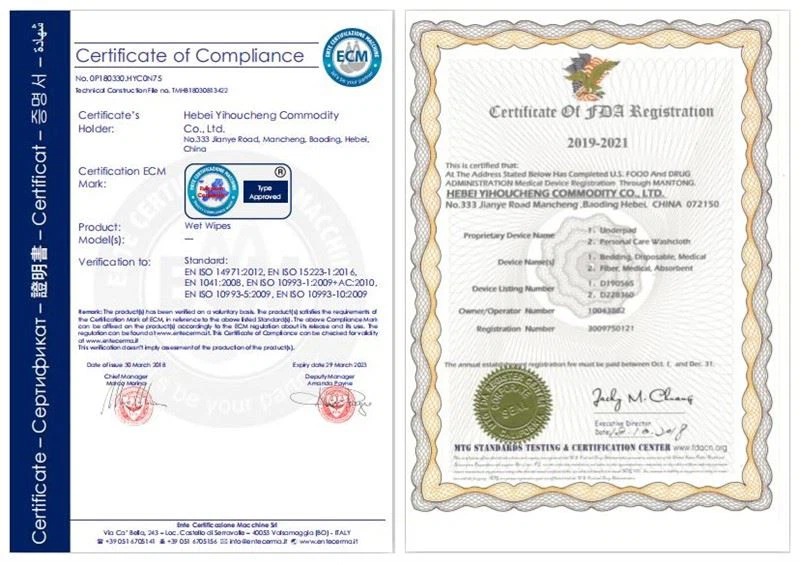
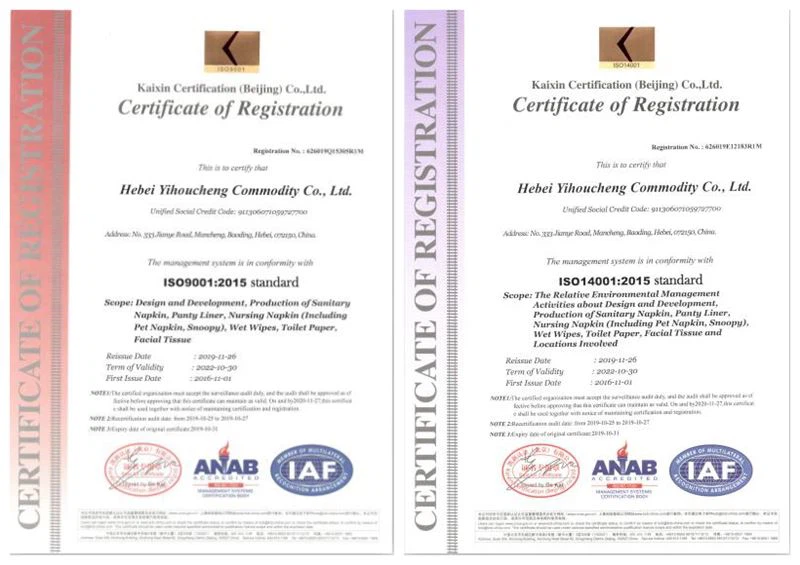
Our factory covers 400,000sqm with under pad workshop, wet wipes workshop and paper making and paper processing workshop. Besides, we have professional QA team and lab. YHC products' range, which is for top leading global brands and companies, covers wet wipes, puppy training pad, nursing pad, sanitary napkin, toilet paper, kitchen paper etc. YHC has been approved by ISO9001 quality management system and ISO14001 environmental management system, and FDA & CE registration SGS. YHC has also been assessed and certified as meeting the requirements of ISO13485.

Certifications
FAQ
Q: What are kitchen paper towel rolls made of?
Q: How do I remove the plastic wrap from a paper towel roll?
Q: Can I recycle paper towel rolls?
Q: Can I use paper towels to absorb oil spills?
Q: What does "ply" mean in paper towels?
Q: Are paper towel rolls eco-friendly?
Q: Why are some paper towels perforated?
Q: How do I prevent paper towels from tearing at the perforations?
Q: Can I compost paper towels?
Q: How do I store paper towel rolls to keep them fresh?
Q: Can I reuse paper towels?
Q: What is the difference between virgin and recycled paper towels?
Q: How do I choose the right absorbency for paper towels?
Q: Can I use paper towels on sensitive surfaces?
Q: How do I prevent paper towels from unrolling in the dispenser?
Q: Why are some paper towels more expensive than others?
Q: Can I use paper towels to strain liquids?
Q: Can I use paper towels as packing material?
Q: How do I prevent paper towels from sticking together?
Q: What is the average shelf life of a paper towel roll?